
It’s impossible to overstate the importance of the announcements that come out of Google I/O. As Android developers, our day-to-day workflows are heavily influenced by the changes to tooling, libraries and programming languages. Here are some of the big announcements from the past two years:
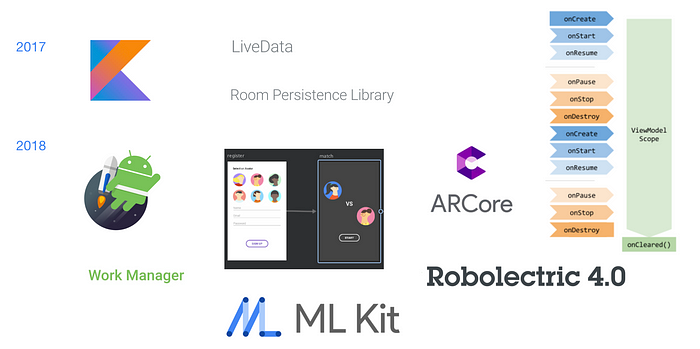
Two years on, Kotlin and the Android Architecture Components suite are almost mandatory for building Android apps.
2019 Schedule
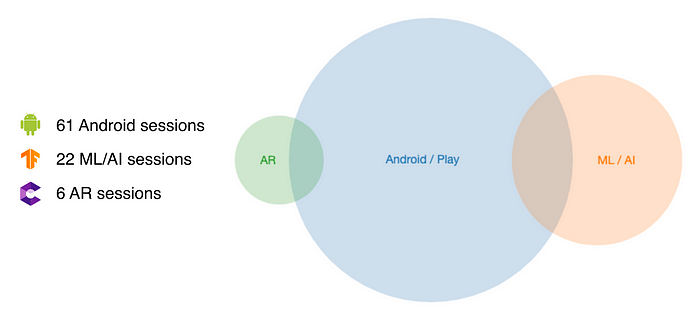
The Google I/O 2019 schedule lists 178 live-streamed sessions — complete information overload and way more than any mortal can consume. I tend to focus mainly on the Android stream for my day-to-day role, and the Machine Learning and Augmented Reality streams due to the incredible innovation happening in those areas.
With 89 sessions covering my areas of interest, I’ve filtered down a short list of 25 I’ll try to view; in reality I’ll be lucky to get through 15.
The Classics
These four sessions are a great way to get started.

Android Architecture & Testing
With only one session dedicated to testing, I’m hoping we get more information about running espresso tests headless using a Robolectric JVM emulator target (as announced in 2018, but still somewhat mysterious). I also heard someone speculate that it might make sense to include Dagger or a new dependency injection framework in the Architecture Components suite.

UI / Productivity
There’s a bunch of new UI features, and several sessions focussed on how to make building apps easier in Android Studio. I’m interested to see how the Bubble API and Sharing Shortcuts relate to the Slices feature announced last year.

Kotlin / Optimisations
A dedicated session on coroutines should help determine if RxJava is still the best way to handle threading. There’s also some welcome updates on the App Bundle and how it can be used to reduce app size.

Machine Learning & AI
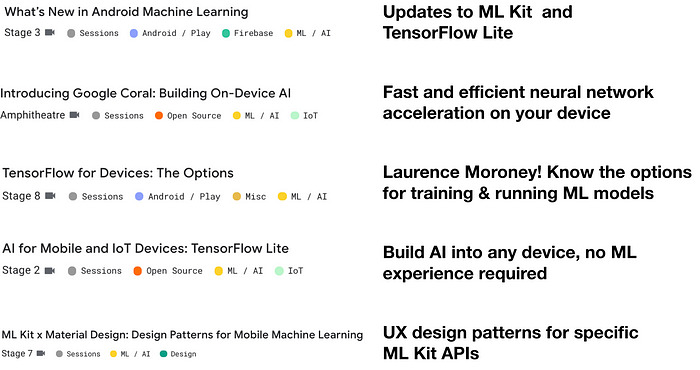
Lots of updates around ML Kit and Tensorflow Lite, as well as an unusual talk about UX patterns for ML Kit APIs, e.g. Facial Detection. Shout out to Laurence Moroney, who always does a great job of making complex topics accessible. His talk breaks down all the current options for training and running ML models on mobile devices.
One of my favourite talks last year was around musical patterns and machine learning. It’s something that I’ll probably never use, but it was really fun and a great way to impress musicians at dinner parties. The Machine Learning track has a few more of these “out there” sessions in 2019 that I’ll squeeze in if I can: Music & Machine Learning and Making Art with Artificial Intelligence.
Augmented Reality
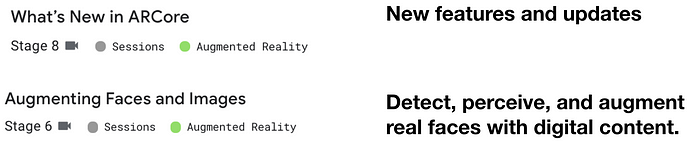
ARCore has a number of new updates since its 1.0 release last year, and it’s interesting to see a dedicated session on how to detect, perceive and augment real faces with digital content — a use case that Google thinks will be prevalent moving forward.
What’s Missing?
A few things I would have liked to see on the schedule:
- More on testing: One session seems a little light given its importance.
- Jake Wharton: I look forward to his technical talks on Kotlin, but he’s deemed Google I/O to be too product focused for him and won’t be attending.
- Kotlin/Native & Multiplatform Projects: This is wishful thinking, but I’d love to see more discussion around sharing code across Android and iOS projects.
Note that new sessions are always announced to accompany the big keynote announcements.
Plan of Attack
Here’s how I like to tackle Google I/O to ensure I take advantage of all the relevant updates and announcements:
Team Up!
Set aside a couple of days during the conference to watch at least a handful of the most impactful talks. This should get teams motivated to watch more talks over the following weeks.
Tech Radar
Rather than try to get a deep understanding of everything I watch, I’ll use our Tech Radar to record, categorise and track the items I’d like to explore further. More information on how to setup a Tech Radar can be found here.
Share
Product Owners and non-technical people love to know what’s going on at the big tech conferences. Host a brownbag, write a blog or just have a chat about the things that excite you the most. This is a great way to get time allocated to dig deeper into the things that interest you.
Of course, there are lots of other interesting sessions covering Flutter, Firebase, Assistant and the gamut of Google technologies so check the I/O site for the full schedule.
This blog post is adapted from a talk I gave at GDG Melbourne.
 App Kitchen